
Broader context across selected guest and common areas
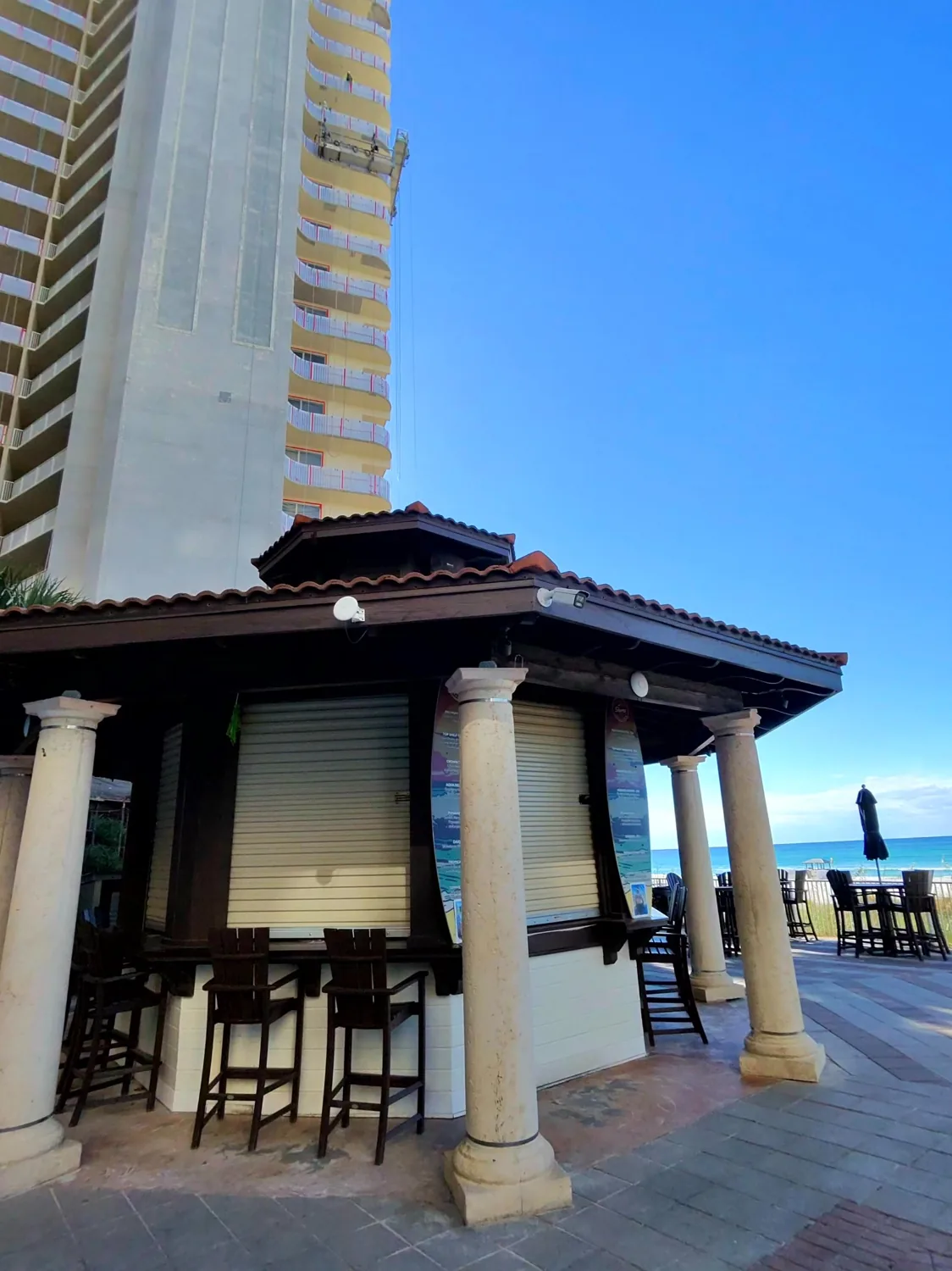
Documented local project • Gulf-front resort condominium • Panama City Beach, Florida
Ocean Towers Beach Club
Multi-point smart surveillance designed to improve guest-area visibility, support earlier awareness and preserve evidence around safety-sensitive property zones.
Project account by CybersmetricsTechnical review: Peter O. PetrikLast reviewed: September 11, 2026
The operating challenge
Multiple coordinated views for guest-safety awareness.
At an occupied beachfront resort, one wide camera rarely provides enough context around guest movement, amenities and safety-sensitive areas. Blind spots, changing light, crowds and obstructions can make a single viewpoint inadequate when staff need to understand what occurred before, during and after an event.
Surveillance supports awareness, response and documentation. It does not replace certified life-safety systems, trained personnel, maintenance or property safety procedures.
Multi-point surveillance coverage
Safety-sensitive guest-area visibility
Fixed overview and event-context views
Centralized live and recorded review
Operational incident documentation
The Cybersmetrics approach
Engineering the cause—not just replacing the endpoint.
Cybersmetrics created a multi-point surveillance design using coordinated views rather than expecting one camera to perform every job. Overview cameras preserve scene context while strategically assigned views support closer review of defined operating areas. Centralized recording gives authorized staff a consistent place to review activity and preserve relevant evidence when an incident is reported.
Operational value
What the completed architecture supports.
Multiple viewpoints supporting more complete incident review
Improved ability to observe defined safety-sensitive zones
Recorded evidence available for authorized investigation
A surveillance layout aligned with property operations rather than raw camera count
How the solution works
Risk-based placement
Views assigned according to guest movement, operational concern and the evidence needed.
Multi-point context
Coordinated cameras reduce dependence on a single angle or obstructed scene.
Centralized review
Authorized staff can review related views within one recorded timeline.
Operating procedure
Technology supports staff awareness and documentation; it does not replace supervision or safety policy.
Direct answers for property leaders
Questions this project helps answer.
Clear technical answers based on field experience in occupied Northwest Florida properties.
Can surveillance cameras prevent accidents at a resort?
Cameras cannot guarantee prevention. Properly monitored and positioned surveillance can improve awareness, support faster verification and preserve evidence, but it must work alongside staffing, maintenance, signage and established safety procedures.
Why use multiple camera views around a safety-sensitive area?
One view may be blocked or lack detail. Coordinated overview and closer-context views can show movement, conditions and the sequence of events more completely.
Should AI make automated safety decisions?
AI may flag defined visual events, but alerts can be missed or false. A responsible workflow requires testing, human verification and a documented response procedure.
How are guest privacy and security balanced?
Coverage should be limited to legitimate operational and security purposes, avoid areas with an expectation of privacy and be governed by access, retention and disclosure policies reviewed by the property.
Proof without publishing the security plan.
This project story identifies the property, problem, architecture and operational purpose. Exact device positions, credentials, addressing, retention rules and response procedures remain confidential. Project facts are supplied and technically reviewed by Cybersmetrics.
Managing a similar Northwest Florida property?