
Clearer recorded detail under difficult nighttime conditions
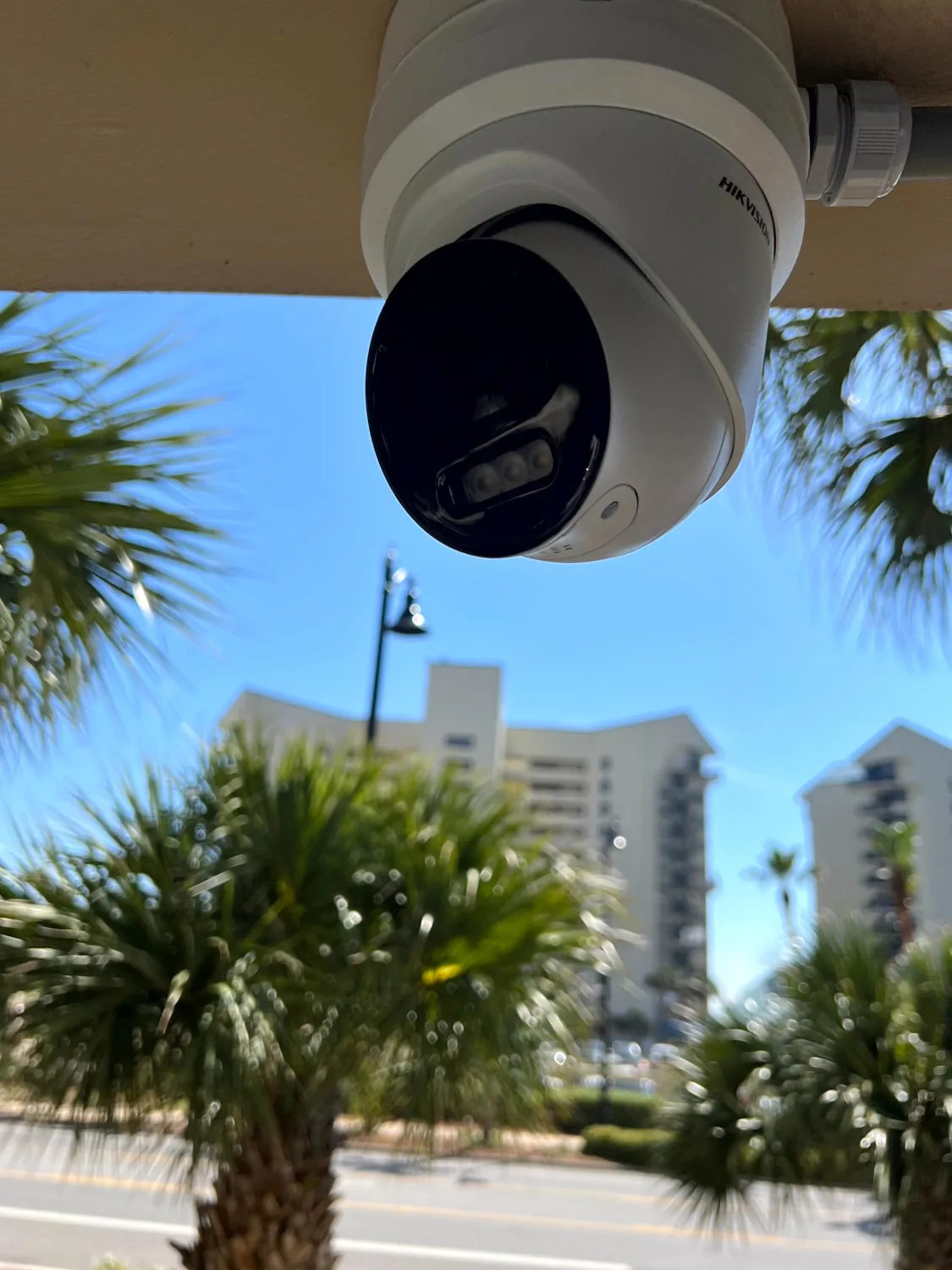
Documented local project • Beachfront condominium • Panama City Beach, Florida
Sterling Beach
A night-optimized surveillance modernization engineered around usable low-light evidence—not megapixel claims alone.
Project account by CybersmetricsTechnical review: Peter O. PetrikLast reviewed: September 11, 2026
The operating challenge
Crystal-clear nighttime evidence begins with scene engineering.
Many cameras look acceptable during the day and fail when the property needs evidence at night. Headlights, reflective surfaces, pool and corridor lighting, deep shadows, motion and infrared reflection can produce blur, glare or washed-out subjects even when a camera has a high megapixel rating.
“Crystal clear” refers to the project objective and improved recorded usability in commissioned views; performance always depends on the specific scene and operating conditions.
Low-light and infrared-capable cameras
Night-focused camera placement
Scene-specific exposure and image tuning
Recorded nighttime acceptance testing
Coastal installation considerations
The Cybersmetrics approach
Engineering the cause—not just replacing the endpoint.
Cybersmetrics selected and positioned current camera technology around the nighttime evidence objective for each scene. Lens choice, mounting angle, subject distance, available light, infrared behavior, shutter and exposure settings were considered together. Representative views were then evaluated from recorded video after dark—the standard that matters during an actual investigation.
Operational value
What the completed architecture supports.
Reduced dependence on resolution specifications alone
Camera views tuned to their assigned identification or overview purpose
More usable evidence around selected after-dark property areas
A repeatable day-and-night commissioning standard
How the solution works
Camera selection
Low-light sensitivity, infrared behavior, lens and dynamic range matched to the scene.
Placement geometry
Distance, height, viewing angle and expected subject movement considered before mounting.
Image tuning
Exposure, shutter, gain and illumination adjusted to balance brightness with moving detail.
Night acceptance
Recorded clips reviewed after dark to verify that each view meets its assigned purpose.
Direct answers for property leaders
Questions this project helps answer.
Clear technical answers based on field experience in occupied Northwest Florida properties.
What makes a security camera good at night?
Usable nighttime evidence depends on sensor performance, lens, subject distance, motion, mounting angle, available or infrared light and exposure settings. Megapixels alone do not determine night quality.
Why are faces blurry even when the scene looks bright?
A camera can brighten a dark scene by using a slower shutter or more gain. That may create motion blur or noise. Identification views require enough light and exposure settings appropriate for moving subjects.
Can infrared cameras see through glass?
Usually not reliably when the infrared source is behind the same glass. Reflection can wash out the image. Camera placement or separate illumination should be designed around the actual environment.
How should nighttime camera performance be accepted?
Review recorded video after dark with representative movement at the intended distance. Verify faces, clothing, vehicles or other evidence according to the purpose assigned to that camera.
Proof without publishing the security plan.
This project story identifies the property, problem, architecture and operational purpose. Exact device positions, credentials, addressing, retention rules and response procedures remain confidential. Project facts are supplied and technically reviewed by Cybersmetrics.
Managing a similar Northwest Florida property?