
Access Control guide
Basic access-control preventive maintenance checklist
Monthly access-control checks for doors, gates, credentials, event records, batteries and administration without bypassing life-safety requirements.
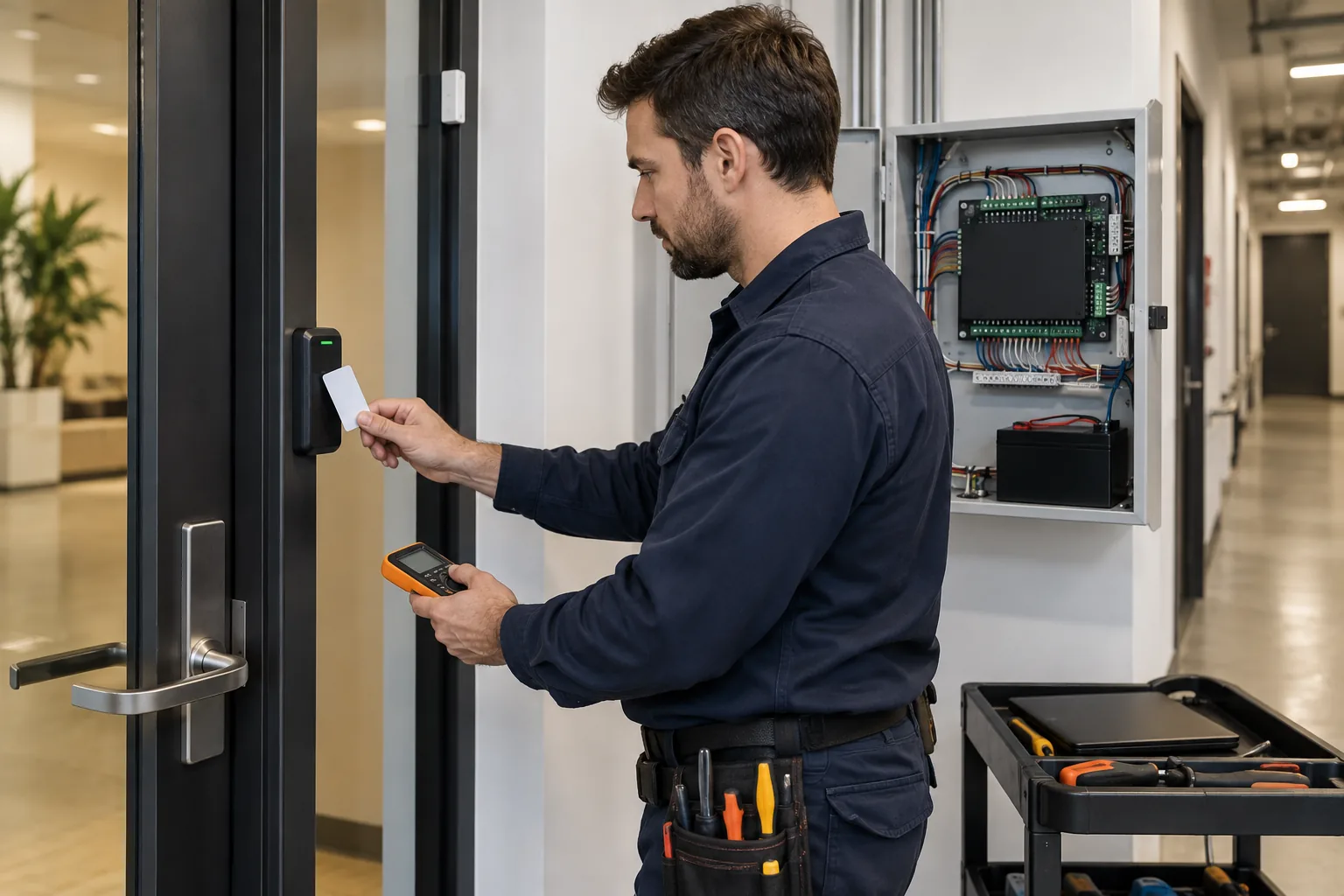
Direct answer
The safe starting point.
A basic access-control check confirms each opening closes and latches, valid and denied credentials create the correct event, door contacts report accurately, request-to-exit operates normally, administrators remain authorized and backup power shows no visible fault. Do not adjust locking or life-safety hardware unless qualified and authorized.
Basic procedure
A documented check is more useful than a guess.
Follow the equipment manufacturer’s instructions and your property’s safety procedures. Stop whenever access, voltage, moving equipment or life-safety operation creates uncertainty.
- 01
Observe the complete opening
Confirm the door closes, aligns and latches without being pushed, dragged or held open.
- 02
Test authorized and denied entry
Use controlled test credentials and verify the reader indication, unlock period and event record.
- 03
Verify monitoring
Check door contact, held-open, forced-open and request-to-exit events against actual operation.
- 04
Review users and roles
Remove departed users, shared accounts and unnecessary administrators; confirm MFA where supported.
- 05
Check visible power condition
Review controller, power-supply and battery indicators for faults without touching exposed electrical components.
- 06
Record the result
Document opening, date, tests, exceptions, photographs and the person responsible for correction.
Avoid these mistakes
Do not create a larger failure.
- Blocking a door open to silence an alarm
- Changing lock behavior without life-safety review
- Sharing administrator passwords
- Deleting event history before an incident is resolved
- Working inside energized power supplies
Call a professional when
The system needs more than observation.
- A door does not reliably latch or release
- Fire-alarm or emergency behavior is unknown
- Controller or credential platform is unsupported
- Batteries are swollen, hot, leaking or faulted
- Events do not match physical door operation
- A vendor controls the only administrator account
Related professional service
Access Control
Review the complete service scope, operating decisions and Northwest Florida conditions before requesting work.