
A layered response to recurring surge exposure
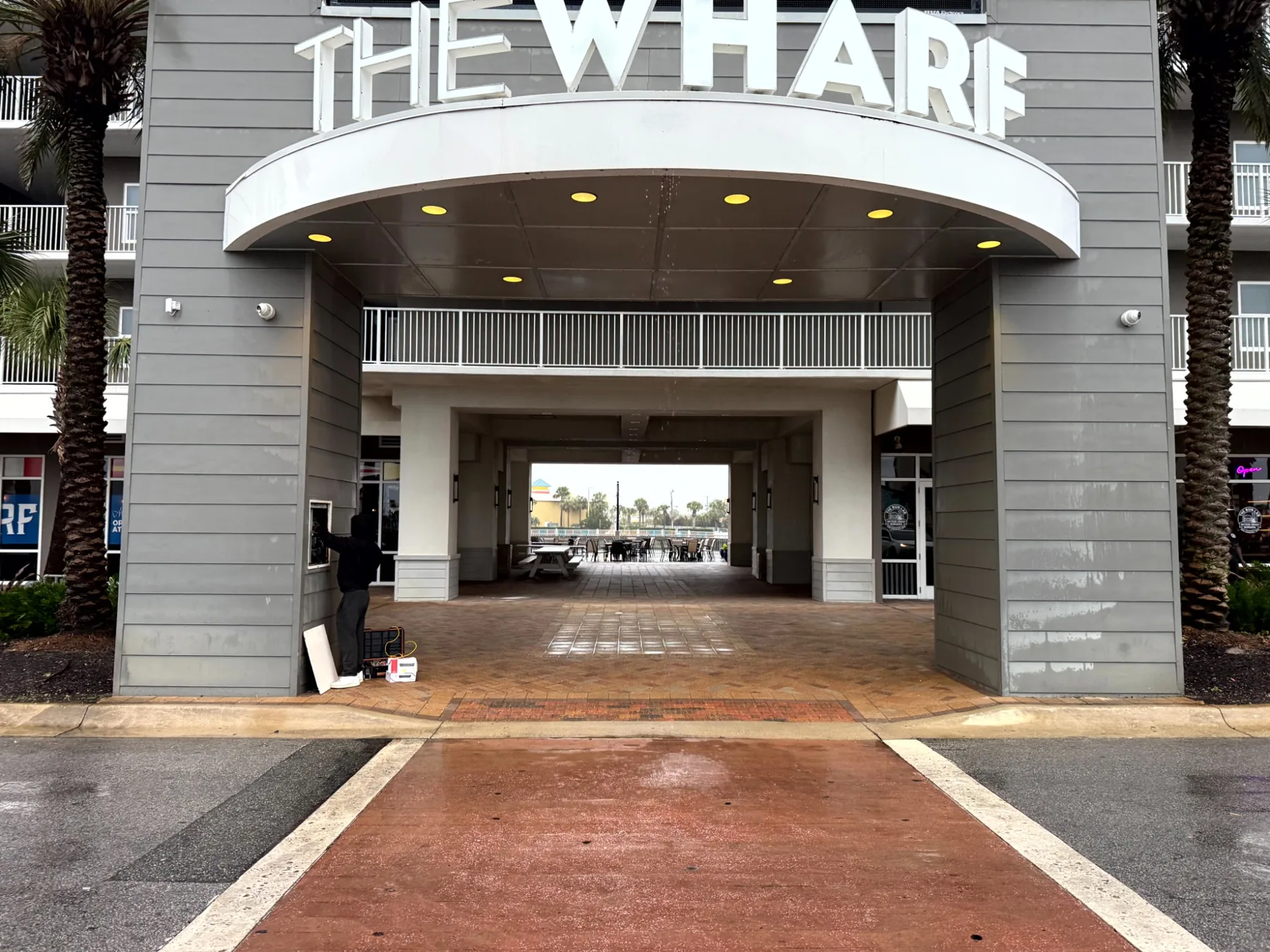
Documented local project • Large mixed-use condominium property • Panama City Beach, Florida
Laketown Wharf
A coastal surge-resilience project combining localized surge-protection modules with a fiber-optic backbone to reduce exposed conductive pathways.
Project account by CybersmetricsTechnical review: Peter O. PetrikLast reviewed: September 11, 2026
The operating challenge
Addressing recurring surge exposure at the infrastructure level.
Coastal properties face lightning, utility disturbances, long cable pathways and equipment distributed across multiple building areas. Replacing failed endpoints without addressing how damaging energy travels through power and copper communications can allow the same problem to return.
No surge strategy can promise immunity from a direct or severe electrical event. The goal is layered risk reduction, electrical isolation where practical and faster diagnosis.
Layered surge-protection strategy
Surge modules at identified exposure points
Fiber-optic backbone
Reduced reliance on long copper data pathways
Serviceable high-rise network architecture
The Cybersmetrics approach
Engineering the cause—not just replacing the endpoint.
Cybersmetrics addressed the issue as an infrastructure problem. Surge-protection modules were implemented at identified exposure points, while fiber optics became the backbone for long-distance data transport. Because fiber does not conduct electrical energy between connected network locations, it helps reduce one category of surge pathway; equipment power, bonding, grounding and protection modules still remain essential parts of the layered design.
Operational value
What the completed architecture supports.
Electrical isolation across fiber-connected data pathways
Protection modules positioned around identified equipment risks
A more maintainable backbone for distributed surveillance technology
Clearer separation between endpoint failure and infrastructure cause
How the solution works
Exposure assessment
Power, outdoor copper and interconnection paths reviewed as possible routes for damaging energy.
Surge modules
Protection added at selected equipment and pathway transition points.
Fiber backbone
Nonconductive data transport used for long-distance property connectivity.
Lifecycle inspection
Protection devices treated as sacrificial components that require inspection after significant events.
Direct answers for property leaders
Questions this project helps answer.
Clear technical answers based on field experience in occupied Northwest Florida properties.
Does fiber optics stop every lightning or surge problem?
No. Fiber removes electrical conduction from the fiber data link, but connected equipment still receives power. Grounding, bonding, facility protection, UPS equipment and point-of-use modules must be considered together.
Why do security cameras fail repeatedly after storms?
The camera may be the visible failure while the underlying cause is exposed copper, power quality, grounding, water intrusion or a failed protection device. A complete assessment follows every power and data pathway.
Do surge-protection modules last forever?
No. Surge devices are sacrificial and can degrade or fail after absorbing events. They should be accessible, documented and inspected after significant storms or unexplained equipment failures.
Why use a fiber backbone at a large condominium?
Fiber supports long distances and bandwidth while electrically isolating data connections between network locations, making it well suited to large coastal and high-rise properties.
Proof without publishing the security plan.
This project story identifies the property, problem, architecture and operational purpose. Exact device positions, credentials, addressing, retention rules and response procedures remain confidential. Project facts are supplied and technically reviewed by Cybersmetrics.
Managing a similar Northwest Florida property?